
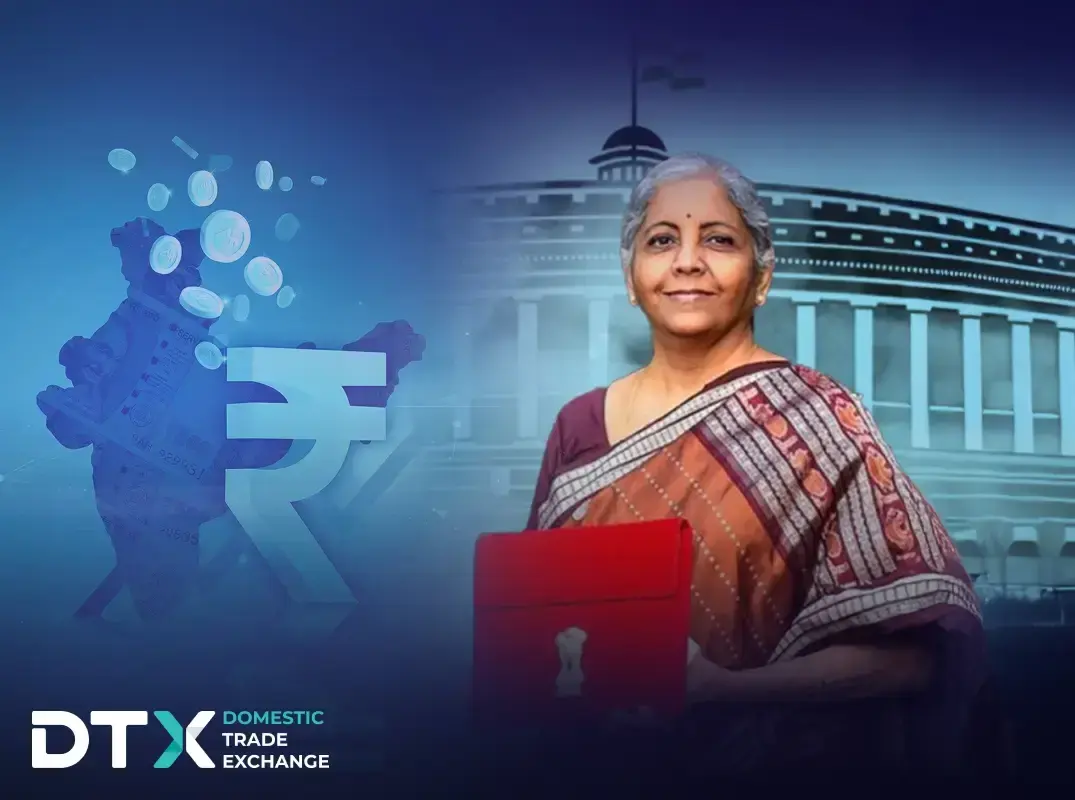
Union Budget 2026 and the Long Game for Indian Businesses
Union Budget 2026 marks a significant change in how the government and nation as a whole is choosing to support the businesses ecosystem including startups, and MSMEs at scale. The focus this year is not on short-term relief, but on building systems that enable scale, predictability, and execution.
Across manufacturing, startups, working capital, and enterprise supply chain finance, the Budget reflects a single theme; that growth will be driven by infrastructure, formalisation, and financial discipline rather than siloed incentives that do not paint the larger picture.
Stability as the Key for Business Growth
The government continues to emphasise financial discipline alongside sustained capital expenditure. Investments in transport, logistics, urban development, and digital infrastructure continue to remain integral to the growth agenda.
This consistency improves predictability by reducing uncertainities for businesses. Stable policy signals make it easier to plan expansion, hiring, and other strategic investments in the long run. Growth here is anchored in productivity and efficiency, and not temporary infusion of funds.
Startups: From Inception to Growth Engines
Budget 2026 reinforces a shift in India’s startup story. The objective is no longer just to encourage startup formation, but to support scale and sustainability, and growth alongside.
A fresh ₹10,000 crore Fund of Funds aims to broaden access to equity capital, particularly for founders and sectors that have historically been passed over. Complementary credit measures seek to address the gap that emerges once startups move beyond early traction but do not yet meet various banking requirements .
The emphasis is strong but important. Capital support is increasingly tied to governance, transparency, and integration into formal financial systems.
Manufacturing, Semiconductors, and Strategic Technology
Manufacturing and deep tech receive sustained attention, with expanded support for semiconductors, electronics manufacturing, and domestic IP creation.
The focus extends beyond assembly. Incentives are aligned toward design capabilities, component ecosystems, and long-term competitiveness. This signals an intent to position India as a serious participant in global technology value chains.
For technology-led businesses, the message is clear. The next phase is about execution at scale.
Working Capital Reform Takes Centre Stage
One of the most consequential elements of Union Budget 2026 lies in how it addresses MSME and enterprise supply chain finance via TReDS through RBI-licensed TReDS platforms, including DTX by KredX.
Mandatory routing of MSME receivables through TReDS for Central Public Sector Enterprises changes the default payment behaviour of large buyers. Payment discipline becomes systemic rather than discretionary.
This is reinforced by the proposed integration of Government e-Marketplace data with TReDS platforms such as DTX by KredX, improving invoice authenticity and information visibility for financiers. CGTMSE support for invoice discounting lowers risk perception and expands lender participation.
Most significantly, the recognition of TReDS receivables as asset-backed securities reframes receivables as a formal financial asset class. This opens the door to deeper liquidity, secondary market development, and more resilient working capital markets.
Taken together, these measures move receivables financing from policy intent to execution.
Also read: From Compliance to Catalyst: Charting the Journey of TReDS in India Report
Simplification and Cost of Compliance
The Budget also advances regulatory and tax simplification. Consolidation of service classifications and clearer safe harbour thresholds reduce ambiguity and compliance overheads, particularly for digital and technology-led businesses.
For companies operating at a large scale, clearcut thresholds directly helps with better forecasting and faster decision-making.
Also read: What is TReDS? Meaning, Platform & Registration Guide
Why Budget 2026 Feels Structurally Different
Union Budget 2026 does not rely on a single headline announcement or monumental shift. Its impact lies in how multiple reforms work with each other to bolster the ecosystem ground-up.
Manufacturing incentives without working capital reform would stall. Startup funding without payment discipline would leak. Infrastructure without financial plumbing would underperform.
By addressing these together, the Budget treats MSME finance, TReDS adoption, and enterprise supply chain finance as national infrastructure rather than siloed events that need to be singled out.
The Larger Signal for Businesses
For business owners, entrepreneurs, CFOs, and enterprise leaders in general, Budget 2026 sends a strong message that the next phase of growth will see the rise of businesses that are formal, compliant, transparent, and ready to operate at scale while others fall behind.